A slab that fits the bathroom wall may not pass the stair landing. Check the complete delivery route before ordering large-format material.
Door width alone is not enough
A slab can fit the bathroom wall yet fail to pass the corner outside the apartment. Check the tile layout and delivery route together before ordering the material.
Measure clear openings, door heights and space on both sides. Allow for packaging or a handling frame and the people moving it. Comparing the slab with an opening's diagonal does not establish whether the complete manoeuvre is possible.
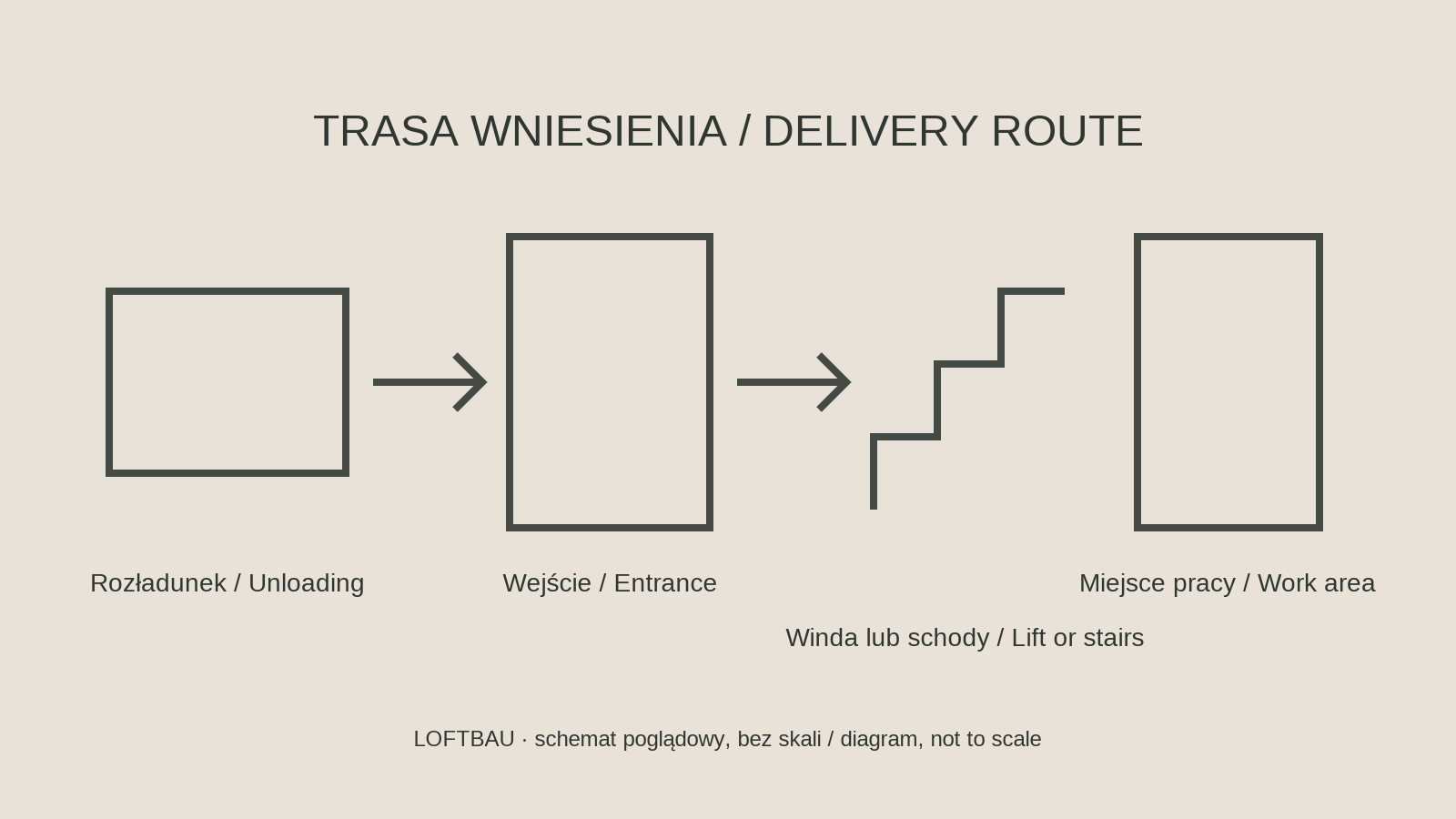
Walk the route from the delivery vehicle to the work area
Start outside: where can the vehicle stop, where will unloading happen and how far must the material travel? Then inspect the gate, entrance, corridors, lift or stairs and the final approach to the bathroom.
Photograph narrow points and corners, recording measurements and the floor number. A short route video helps the initial discussion with the contractor. A restricted route still needs an on-site assessment and confirmation by the team responsible for handling.
Assess the lift and stairs separately
Lift capacity does not tell you whether a 120 × 280 cm slab will fit. Check the cabin, clear entrance, approach space and room to position the complete handling assembly. Agree the building's rules for renovation deliveries too.
On stairs, the constraint may be a landing, handrail or low ceiling. An unusable lift does not automatically make the stairs suitable. Do not test a doubtful passage by forcing or bending the slab.
Premium bathroom pricing — Kraków
Labour from PLN 12,500 net · Free consultation
Delivery to the building may exclude carrying upstairs
Unloading beside the vehicle, delivering to the entrance and carrying into the apartment are different services. Before paying for transport, confirm precisely where the carrier's service ends.
Agree who supplies the handling team and equipment, protects communal areas and receives the material. Record the inspection and damage-reporting procedure under the seller's and carrier's terms. Do not leave responsibility undecided until the delivery vehicle arrives.
Prepare suitable storage before delivery
Choose a location that leaves circulation routes and work access clear. Coordinate delivery with substrate preparation and services installation to reduce the need to move slabs repeatedly.
Select supports and restraints for the actual material and its manufacturer's instructions. Leaning a slab against an arbitrary wall is not a storage plan. Laminam's cladding and flooring guide addresses corner protection and avoiding bending during handling of the slabs it covers. It is not a universal procedure for every thickness, package or brand.
When a full slab cannot reach the apartment
Ask the responsible team to assess other safe, permitted options first. Specialist access needs separate arrangements for equipment, site conditions and permissions; do not assume it will be available.
Changing the format or layout may be another option. Cutting before delivery affects joints, pattern continuity and fabrication. Approve the revised wall elevations before cutting. A smaller format should follow a considered layout, rather than an improvised decision beside the vehicle.
Your checklist before placing the order
Confirm the material's format, thickness and packaging; unloading point; complete route; lift rules; responsibility for people and equipment; and storage location. Record what happens if the delivered material cannot be carried inside.
Logistics can change the organisation and quotation even for bathrooms with identical tiled areas. For a project in Kraków or nearby, send LOFTBAU the design, slab format, floor number, lift information and photos of restricted passages. Discuss access before purchasing, alongside the tile layout.
Further planning and manufacturer guidance
Before purchasing, compare the cutting allowance and the planned installation of 120 × 280 cm slabs. Discuss large-format tile installation in Kraków with LOFTBAU.
Manufacturer reference: Laminam technical documentation explains handling precautions for the products covered by each guide.